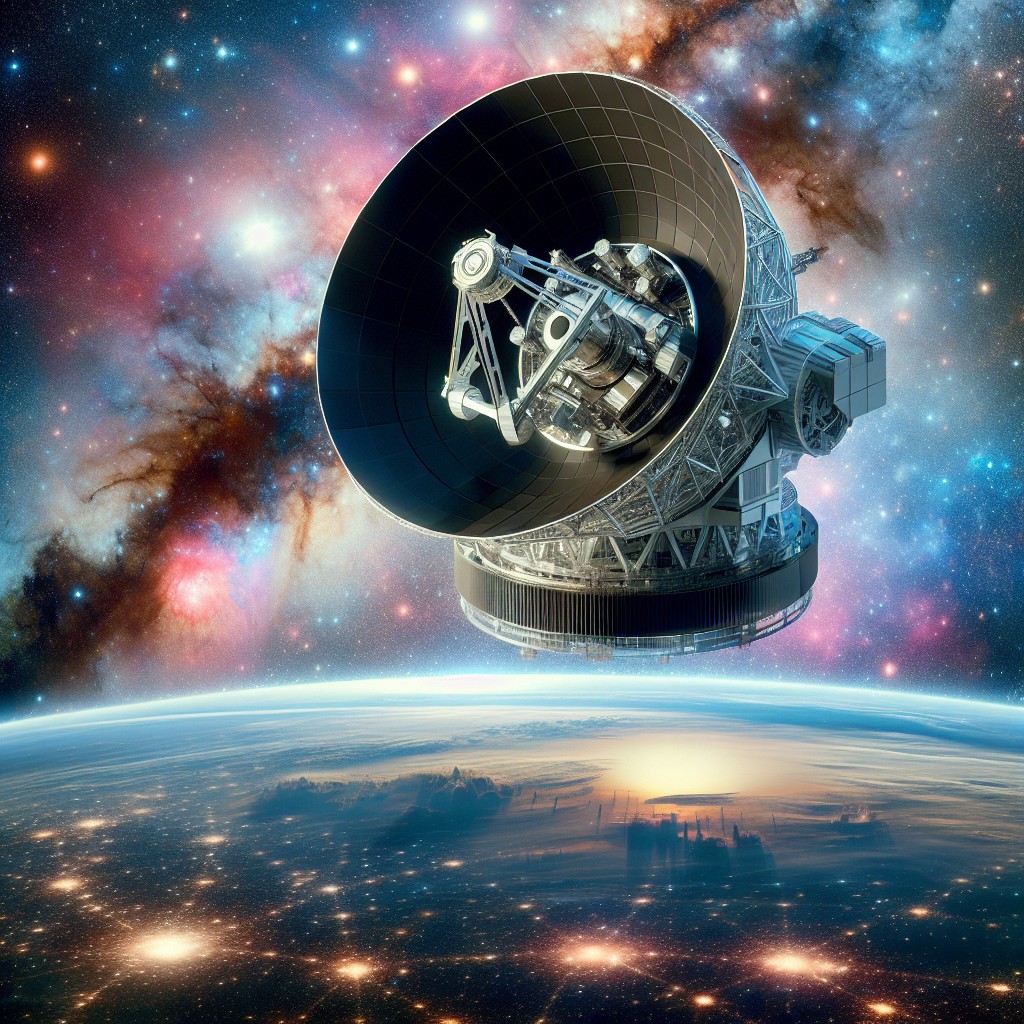
Space telescopes have transformed our understanding of the universe through clear and unobstructed views beyond Earth’s atmosphere. As technological advancements continue, several major upgrades to existing and upcoming space telescopes are anticipated, promising to enhance observation capabilities and enable groundbreaking discoveries.
Enhanced Instruments Boosting Observation Precision
Recent upgrades to space telescopes include the integration of more sensitive detectors and adaptive optics technology. Instruments now operate across a broader spectrum, from ultraviolet to far-infrared wavelengths, increasing the range of observable phenomena. These enhancements allow scientists to observe distant galaxies with higher resolution and detect faint exoplanets previously beyond detection limits.
Next-Generation Space Telescopes Set to Launch
The upcoming launches of new space telescopes aim to push the boundaries of astronomical research further. Projects such as the James Webb Space Telescope (JWST) and the Nancy Grace Roman Space Telescope are equipped with advanced cameras and spectrographs designed to analyze cosmic objects in unprecedented detail. These instruments are expected to provide valuable data on the formation of stars, galaxies, and potentially habitable exoplanets.
Space telescopes play a critical role in studying dark energy and dark matter
Dark energy and dark matter remain two of the most enigmatic aspects of the cosmos. Upgrades to space telescopes allowing precise measurements of cosmic expansion and galaxy clustering help researchers investigate these elusive components. Data collected from these instruments contribute to refining cosmological models and understanding the universe’s large-scale structure.
Improved Data Processing and Transmission Technologies
Alongside hardware upgrades, significant improvements in data processing algorithms and transmission speeds facilitate real-time analysis and broader data sharing among researchers worldwide. These advances reduce the time between capture and discovery, accelerating the scientific workflow and enabling more collaborative efforts in space research.
Space telescopes facilitating multi-mission collaboration
International cooperation in space telescope missions has increased, with agencies sharing resources and exchange data to maximize scientific return. Coordinated observations between space-based and ground-based telescopes now allow astronomers to corroborate findings and conduct more comprehensive studies. This collaborative approach is expected to yield new insights into cosmic phenomena such as supernovae, black holes, and planetary atmospheres.
Conclusion
The upcoming upgrades and launches of space telescopes signify an important step forward in astronomical research. With enhanced instruments, improved data capabilities, and increased international collaboration, scientists anticipate significant discoveries in the near future. These advances will deepen our understanding of the universe and potentially answer long-standing questions regarding its origin, composition, and evolution.
Frequently Asked Questions about space telescopes
What are the main improvements expected in new space telescopes?
New space telescopes are expected to have more sensitive detectors, broader wavelength coverage, and advanced instruments that improve the precision and depth of astronomical observations.
How do space telescopes contribute to the study of dark matter and dark energy?
Space telescopes provide accurate measurements of galaxy distribution and cosmic expansion, which are essential for understanding dark matter and dark energy that affect the universe’s structure and evolution.
Why is international collaboration important for space telescope missions?
International collaboration enables resource sharing, coordinated observations, and comprehensive analysis, enhancing the scientific value and efficiency of space telescope missions.
How have data processing technologies improved the use of space telescopes?
Advanced data processing algorithms and faster transmission speeds allow for quicker analysis and sharing of observations, speeding up the discovery process and enabling real-time collaboration.
Where can I find reliable information about current space telescope missions?
Official websites of organizations such as NASA and the European Space Agency provide up-to-date and accurate information about ongoing and upcoming space telescope missions.